


Discover the revolutionary Tilt and Turn windows by OKNOPLAST – a perfect combination of timeless craftsmanship, innovative technology, and modern design. Ideal for homeowners, architects, and developers seeking versatile and energy-efficient solutions.
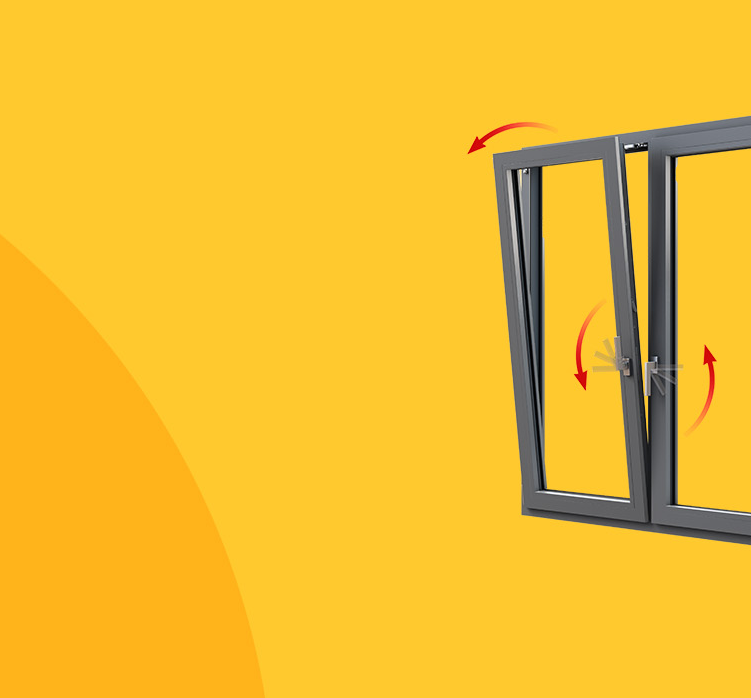
 Save money
Airtight design keeps your home cool in summer and warm in winter. Save on energy bills!
 Save time
Open easily and quickly with one center handle. No more difficult double-hung lifting
 Gain silence
The airtightness of the window keeps the inside quiet. No more annoying city u0026 traffic sounds.
 Gain security
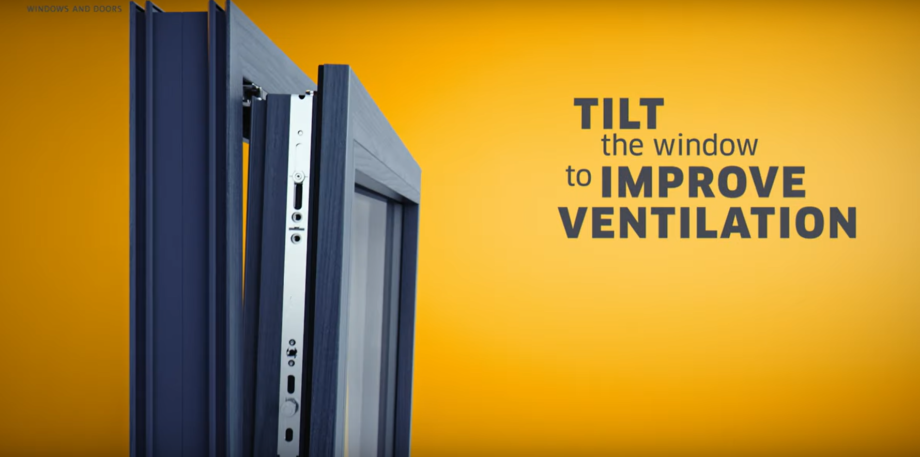
Thanks to the tilt, you can let in fresh air at the top of the window, while keeping the bottom securely closed.
 Gain light
Tilt and turn and quickly clean the windows from inside and let more sunlight to your space.
How Tilt and Turn Windows Work?
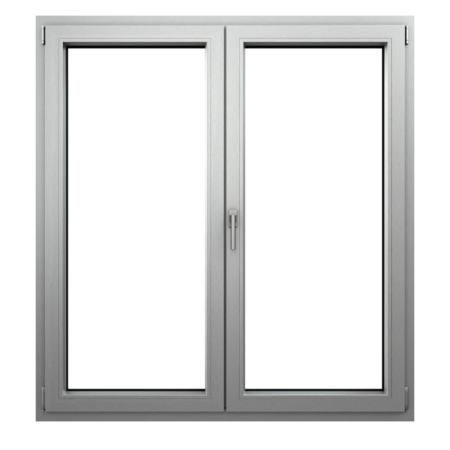
Tilt & Turn windows are designed for effortless operation with a single handle:
Tilt for Ventilation: Rotate the handle 90° to tilt the window inward at the top, allowing airflow while keeping it securely locked and safe.
Turn for Full Access: Rotate the handle 180° to open the window fully inward for easy cleaning or increased ventilation.
This dual functionality makes them a practical and stylish choice for any room in your home.

Why Choose Tilt and Turn Windows?
Enhanced Security
Multi-point locking systems and reinforced steel frames provide superior protection for your home.

Simple Maintenance
Inward opening design makes cleaning effortless and safe, even on upper floors.
Energy Efficiency
Advanced multi-chamber profiles, Low-E glass, and triple glazing reduce heat loss and lower energy bills.

Stylish Design
Sleek profiles, customizable colors, and a range of finishes to match any architectural style.
Who Are Tilt and Turn Windows Made For?


Tilt and Turn vs. Traditional Windows – See the Difference
Explore our side-by-side comparison and find the perfect solution for your home or project.




FAQ
Not at all. While some may confuse uPVC with standard US vinyl, European-engineered Tilt and Turn uPVC windows are in a class of their own. Unlike common vinyl products, they contain no plasticizers, which gives them superior stiffness, dimensional stability, and long-term performance. Reinforced with steel and built with multi-chamber profiles, these windows offer exceptional durability, airtightness, and energy efficiency- qualities far beyond what commodity vinyl can deliver.
No. Structural strength in Tilt and Turn uPVC windows comes from advanced system engineering- not just the material. With features like welded corners, steel reinforcements, and load-bearing glazing, our Tilt and Turn uPVC windows can meet or exceed demanding wind-load and design pressure requirements. In fact, OKNOPLAST systems can achieve ratings up to DP 90, making them a robust, high-performance alternative to aluminum or wood windows in both residential and commercial applications.
Tilt and Turn windows provide two distinct operating modes in a single sash, controlled by one handle. Tilt mode allows secure, controlled ventilation or micro-ventilation without full opening, while turn mode provides full inward opening for egress, cleaning, and maximum airflow.
This eliminates cranks, secondary locks, and additional operating hardware. From a building perspective, tilt & turn operation improves usability, safety, and sealing performance while simplifying hardware complexity.
Properly designed tilt & turn windows use pressure-equalized drainage chambers, multi-level gasket systems, and full-perimeter compression sealing.
In tilt mode, the opening is limited and controlled. Wind-driven rain is managed through the frame’s engineered drainage paths rather than relying solely on exterior seals, resulting in consistent water performance under dynamic pressure conditions.
Airtightness is a critical performance feature that improves comfort, energy efficiency, acoustic performance, and moisture control. Indoor air quality depends on intentional ventilation strategies, not uncontrolled leakage through window assemblies.
Tilt and Turn windows achieve very low air infiltration, often up to 30× tighter than a standard US double-hung, while still providing planned ventilation via tilt mode or integration with mechanical ventilation systems. Uncontrolled leakage causes drafts, condensation risk, noise intrusion, and higher HVAC loads. Healthy air comes from ventilation, not leaks!
Tilt and Turn windows offer secure tilt ventilation with limited opening and maintained partial locking. Security performance is specification-driven and can include mushroom cams, reinforced strike plates, lockable handles, laminated glass, and proper anchoring.
When specified correctly, tilt ventilation does not compromise security.
Yes. European frames are typically deeper and designed for through-frame anchoring or installation brackets, allowing precise integration into US wall assemblies. Structural nail-fin options, including aluminum fins, are also available.
Best practice treats the window as part of the continuous air and water control layers, rather than relying solely on a flange-based installation.
Tilt and Turn windows are engineered for staged installation. The sash with IGU can be removed, allowing the frame to be installed independently. After the frame is plumb, level, and sealed, the sash is reattached and adjusted.
This reduces installation weight, improves precision, minimizes frame distortion, and preserves air and water performance.
European windows are custom-manufactured for each project. Large single operable Tilt and Turn sashes (up to approximately 5’ × 5’, depending on loads) as well as curved, arched, and non-rectangular operable units are achievable through engineered solutions.
Size limits are governed by structural, hardware, and performance requirements rather than manufacturing constraints.
Let’s talk about your project!
Request a quote, discuss specifications, or get help choosing the right system
Send a request
"*" indicates required fields
What Defines European-Style Tilt and Turn Windows in US Homes?
OKNOPLAST tilt and turn windows are dual-function European-style fenestration units where each sash either tilts inward from the top for ventilation or swings fully inward like a door. Built with steel-reinforced multi-chamber uPVC profiles, they’re tested to DP-80 per ASTM E330 and hold both ADA compliance and Passive House certification.
A single handle controls two distinct operating modes. In tilt mode, the top of the sash pivots inward 3-4 inches – enough for controlled air exchange without drafts or security concerns. Rotate the handle further, and the entire sash swings inward on a vertical axis, functioning like an interior door for full access and easy cleaning. This kind of dual functionality simply doesn’t exist in standard US double-hung or casement designs, where sashes typically swing outward or slide vertically.
The structural backbone of these windows is a steel-reinforced multi-chamber uPVC profile. The multi-chamber cross-section traps air in discrete cavities to cut thermal bridging across the frame, while embedded steel inserts resist racking, deflection, and wind pressure loads – a meaningful distinction from the unreinforced vinyl frames common in US window manufacturing.
DP-80 certification per ASTM E330 confirms the PAVA system withstands 80 psf structural wind pressures, a rating that’s rarely documented on European-origin tilt and turn products sold in the US residential remodeling market.
Beyond structural performance, OKNOPLAST tilt and turn windows simultaneously meet ADA accessibility standards and Passive House certification requirements. The former governs operable hardware reach and force thresholds, while the latter confirms the airtightness and thermal performance levels demanded by high-performance building science applications.
Aesthetic flexibility is equally broad – over 50 color finishes are available, including wood-look laminates and matte tones, alongside custom shapes such as arched, round, and trapezoidal configurations. This makes them a versatile choice for both new construction and remodeling projects.
| Feature | OKNOPLAST Tilt and Turn | Standard US Double-Hung |
|---|---|---|
| Operation | Dual-function: inward tilt (ventilation) + full inward swing (door-style access), single handle | Vertical sash slide only; no inward opening capability |
| Hurricane Rating | DP-80 per ASTM E330 (PAVA system) | Typically DP-15 to DP-35; DP-80 not standard |
| Frame Construction | Steel-reinforced multi-chamber uPVC profile | Single- or dual-chamber unreinforced vinyl or aluminum |
How single-handle operation controls closed, tilt (180°), and turn (90°) positions
OKNOPLAST tilt and turn windows use a single rotating handle to manage three distinct positions: closed (handle down, all locking points engaged), tilt at 180° (top of sash angled inward for ventilation), and turn at 90° (full inward swing for airflow and cleaning access). Every rotation simultaneously engages or releases all locking points around the entire frame perimeter – a unified mechanical system that delivers three functional modes through one intuitive action.
| Handle Position | Degree of Rotation | Sash Movement | Security Level |
|---|---|---|---|
| Closed | 0° (handle pointing down) | No movement – all locking points fully engaged | Maximum – airtight, weatherproof seal on all frame edges |
| Tilt | 180° (handle pointing up) | Top of sash tilts inward a few inches | High – narrow opening blocks intruder access and rain infiltration |
| Turn | 90° (handle pointing horizontal) | Sash swings fully inward like a door | Open – maximum airflow, full interior/exterior glass cleaning access |
With the handle pointing downward at 0°, the multi-point locking system activates along every frame edge, forming an airtight, weatherproof seal. The movable sash sits flush against the fixed frame, leaving no gap for air infiltration or water penetration under normal operating conditions.
Rotating the handle 180° upward engages tilt mode, angling only the top of the sash inward by a few inches while the sides stay sealed. Fresh air flows through the narrow upper gap, but the restricted opening keeps out rain and prevents intruder access – making it the go-to choice for overnight or unattended ventilation.
At 90°, with the handle horizontal, the entire sash swings fully inward on vertical hinges, much like an inward-opening door. This gives you maximum airflow along with complete access to both glass surfaces for cleaning – all from inside the home, with no need for ladders or exterior scaffolding.
For users with mobility limitations or reduced grip strength, OKNOPLAST offers ADA-compliant accessibility hardware that extends single-handle operation to seniors and individuals with physical disabilities. These handles require minimal rotational force while preserving the same three-position mechanical sequence found on standard European hardware sets.
Even in large-format configurations – up to 8 ft high x 5 ft wide – the single-handle system operates smoothly across all three positions. European-engineered hardware accommodates the added sash weight without demanding extra effort from the user. Whether left-hand hung, right-hand hung, or configured as double French doors, every unit follows the same closed / tilt / turn sequence regardless of orientation or size.
How multi-point locking and compression seals achieve NFRC air infiltration ≤0.3 cfm/ft² and improved insulation
OKNOPLAST tilt and turn windows hit the NFRC air infiltration benchmark of ≤0.3 cfm/ft² by combining two complementary systems: a multi-point locking mechanism that simultaneously compresses the sash against the frame on all four edges, and continuous compression seals that work much like a refrigerator door gasket – a clear step up from the brush seals found in most standard US windows.
Multi-point locking: four-edge simultaneous compression
When the window closes, the multi-point locking mechanism engages at all four sash edges at once, pressing the sash evenly against the frame. That uniform contact eliminates the corner and mid-rail gaps that single- or two-point locking systems inevitably leave behind – the very spots where air sneaks through in conventional double-hung and sliding windows. This even compression forms the structural backbone of the window’s air sealing capability, underpinning its eligibility for ENERGY STAR fenestration certification thresholds.
Compression seals: gasket-based thermal protection
Running the full frame perimeter, the continuous compression seals create a weatherproof, airtight barrier comparable to a refrigerator door gasket. Unlike brush seals or foam weatherstripping – which compress unevenly and break down over time – these seals maintain consistent contact pressure at the sash-to-frame interface, effectively blocking thermal bridging and outperforming conventional US window sealing solutions in both durability and energy efficiency.
Multi-chamber uPVC frame: dead-air insulation
Steel-reinforced multi-chamber uPVC profiles trap dead air within the frame cross-section, cutting conductive heat transfer through the frame itself. Paired with triple-pane argon-filled glazing, the assembly achieves a U-factor at or below the ENERGY STAR Northern zone threshold of ≤0.27 (Note: OKNOPLAST does not currently hold ENERGY STAR certification – confirm status at time of purchase) per NFRC testing. The inherent durability of the uPVC profile ensures those dead-air chambers hold their shape through repeated thermal cycling, keeping long-term insulation performance intact.
One critical caveat: proper installation per manufacturer instructions and local building code is required to maintain whole-wall air barrier continuity. Without proper rough-opening integration, even the best frame-level air sealing won’t translate to the broader wall assembly.
| Sealing System | Mechanism | Performance Benefit |
|---|---|---|
| Multi-point locking | Engages locking points at all four sash edges simultaneously, compressing sash uniformly against frame | Eliminates corner and mid-rail air gaps; supports NFRC air infiltration ≤0.3 cfm/ft² |
| Compression seals | Continuous gasket running full frame perimeter, analogous to refrigerator door seal | Airtight weatherproof barrier; outperforms brush seals and foam weatherstripping in durability and air sealing |
How double and triple glazing reduce U-factor to ≤0.27 for ENERGY STAR Northern zone compliance
OKNOPLAST tilt and turn windows come in both double and triple glazing configurations. The triple-pane option – featuring two argon-filled cavities and warm-edge spacers – achieves a whole-window U-factor of ≤0.27, meeting the ENERGY STAR Northern zone U-Factor threshold (Note: OKNOPLAST does not currently hold ENERGY STAR certification – confirm status at time of purchase). Meanwhile, solar-control glass keeps SHGC in check for Southern zone compliance.
Double glazing: two-pane IGU with argon fill and low-e coating
The double-glazed configuration pairs a two-pane insulated glazing unit with argon fill and low-e glass, delivering meaningfully lower center-of-glass U-factors than single-pane alternatives. Argon – a dense, inert gas with low thermal conductivity – slows heat transfer across the cavity, while the low-e coating reflects radiant energy to further strengthen thermal performance. This setup is well-suited for ENERGY STAR compliance across the North-Central, South-Central, and Southern climate zones, where U-factor thresholds are more forgiving than the Northern zone’s ≤0.27 requirement.
Triple glazing: three-pane IGU with two argon cavities and warm-edge spacers
Triple glazing takes performance a step further with three glass panes, two argon-filled cavities, and warm-edge spacers – together producing a whole-window NFRC-certified U-factor of ≤0.27 that satisfies the ENERGY STAR Northern zone threshold. Warm-edge spacers are key here, as they minimize thermal bridging at the IGU perimeter – the very factor that separates whole-window U-factor from the center-of-glass value. It’s this NFRC whole-window rating, driven by the combination of a steel-reinforced multi-chamber uPVC frame and triple-pane argon fill, that governs ENERGY STAR U-Factor thresholds. For Passive House and other high-performance applications, the same system can push whole-window U-factor down to ≤0.20.
Solar-control glass for SHGC management across all four climate zones
Solar-control glass options bring SHGC down to ≤0.25, satisfying ENERGY STAR requirements for both the South-Central and Southern zones. By combining triple-pane IGUs with selectable solar-control glass, a single OKNOPLAST product line covers all four US ENERGY STAR climate zones – Northern, North-Central, South-Central, and Southern – within one cohesive system.
| Glazing Type | Cavities | U-factor | ENERGY STAR Zone |
|---|---|---|---|
| Double glazing (two-pane IGU, argon fill, low-e) | 1 argon-filled cavity | Above ≤0.27 threshold | North-Central, South-Central, Southern |
| Triple glazing (three-pane IGU, warm-edge spacers) | 2 argon-filled cavities | ≤0.27 (whole-window NFRC) | Northern, North-Central, South-Central, Southern |
How to meet IRC 2021 U-factor and SHGC requirements for tilt and turn windows across US climate zones
OKNOPLAST tilt and turn windows are designed to satisfy IRC 2021 U-factor and SHGC requirements across all four US climate zones through selectable glazing configurations. Triple-pane units address U-factor thresholds in Northern and North-Central zones, while solar-control glass handles SHGC compliance in South-Central and Southern regions. Critically, compliance is measured using NFRC whole-window ratings – not center-of-glass values – as specified in IRC 2021 Table N1102.4.
IRC 2021 Table N1102.4 sets distinct performance thresholds depending on climate zone. The Northern zone demands a U-factor of ≤0.27, while North-Central adds an SHGC cap of ≤0.40 alongside a U-factor of ≤0.30. Both South-Central and Southern zones share a U-factor limit of ≤0.30 and a tighter SHGC ceiling of ≤0.25. OKNOPLAST meets the Northern and North-Central thermal benchmarks with triple-pane insulated glazing units featuring argon fill and warm-edge spacers. For warmer climates, solar-control glazing configurations reduce heat gain while preserving visible light transmittance.
| Climate Zone | U-factor Requirement | SHGC Requirement | OKNOPLAST Solution |
|---|---|---|---|
| Northern | ≤0.27 | Any | Triple-pane IGU + argon fill + warm-edge spacer |
| North-Central | ≤0.30 | ≤0.40 | Triple-pane IGU + argon fill + warm-edge spacer |
| South-Central | ≤0.30 | ≤0.25 | Solar-control glazing configuration |
| Southern | ≤0.40 | ≤0.25 | Solar-control glazing configuration |
When it comes to IRC 2021 compliance, NFRC whole-window ratings are the only applicable metric – center-of-glass figures overstate thermal performance by ignoring frame and edge-of-glass heat transfer. OKNOPLAST tilt and turn windows feature a multi-chamber uPVC frame engineered to minimize thermal bridging, which directly contributes to strong whole-window NFRC ratings. Submitting center-of-glass values to a building official simply won’t satisfy code requirements.
Maintaining those rated NFRC values in the field depends on proper installation per manufacturer instructions and local building code. Poor flashing, inadequate air sealing, or incorrect shimming can introduce infiltration pathways that undermine the thermal performance documented on the NFRC label. Code-compliant installation per local building authority is therefore a building science necessity, not an optional step.
For Passive House (PHIUS) projects in the Northern zone, the IRC 2021 U-factor threshold of ≤0.27 represents a baseline rather than a target. OKNOPLAST triple-pane configurations with argon fill and warm-edge spacers can exceed this threshold, making them well-suited to PHIUS-certified builds where a higher-performing building envelope is required.
How tilt and turn windows meet the U-Factor threshold for §25C eligibility – note that §25C requires ENERGY STAR certification, which OKNOPLAST does not currently hold; confirm at time of purchase and filing
OKNOPLAST triple-glazed tilt and turn windows with an NFRC U-factor ≤0.27 make it meet U-Factor thresholds associated with the §25C Energy Efficient Home Improvement Credit. Note: OKNOPLAST does not currently hold ENERGY STAR certification – §25C eligibility requires ENERGY STAR certification; confirm at time of purchase and filing. Subject to certification, the credit covers 30% of qualifying product cost, up to $600 annually (installation labor not eligible per IRS Publication 5695), through IRS Form 5695 alongside the Manufacturer’s Certification Statement.
The 25C credit applies at a 30% rate on qualifying product cost (installation labor is not eligible per IRS Publication 5695), with a combined annual cap of $600 for windows and skylights. Unlike a deduction, this is a direct reduction of federal tax liability – and because it resets each year, homeowners tackling window replacements in phases can take advantage of it multiple times.
Qualifying involves two key steps: obtaining ENERGY STAR certification and meeting an NFRC-certified whole-window U-factor threshold tied to the taxpayer’s climate zone. OKNOPLAST triple-pane tilt and turn windows, rated at U-factor ≤0.27, satisfy the ENERGY STAR Most Efficient criteria for the Northern zone, placing them within §25C U-Factor thresholds for Northern and North-Central homeowners – note that §25C eligibility requires ENERGY STAR certification, which OKNOPLAST does not currently hold; confirm at time of purchase and filing. ENERGY STAR certification, when held, serves as confirmation that the unit meets IRC Section 25C energy performance requirements.
One important limitation: the credit only applies to existing US residential dwellings – new construction is excluded. Professional installation is also required, and OKNOPLAST supports this through its nationwide installation network. Beyond the financial benefit, replacing windows in an existing home brings real comfort improvements, including better thermal performance and reduced air infiltration.
Proper documentation is non-negotiable for IRS compliance. Homeowners must retain the Manufacturer’s Certification Statement confirming NFRC-certified U-Factor and SHGC values (ENERGY STAR certification is separately required for §25C – OKNOPLAST does not currently hold it; confirm at time of purchase) and file IRS Form 5695 with their federal return for the year of installation. Both documents are required – without either one, the credit simply cannot be claimed.
| Credit Component | Detail |
|---|---|
| Credit Rate | 30% of qualifying fenestration product cost plus installation labor |
| Annual Cap | $600 per year for windows and skylights combined |
| Eligibility | Existing US residential dwellings only; new construction excluded; NFRC U-factor ≤0.27 required for Northern zone ENERGY STAR qualification |
| Required Documentation | Manufacturer’s Certification Statement confirming NFRC-certified U-Factor and SHGC values + IRS Form 5695 filed with federal return. Note: ENERGY STAR certification required for §25C – OKNOPLAST does not currently hold; confirm at time of purchase |
How vinyl (uPVC), aluminum, and wood frames affect thermal performance and maintenance of tilt and turn windows
OKNOPLAST tilt and turn windows are built around steel-reinforced multi-chamber uPVC frames as the default choice – achieving the lowest whole-window U-factor available, requiring zero painting or sealing over their lifespan, and offering 50+ color finishes that include convincing wood-look foils. Aluminum steps in where slim sightlines and large formats are priorities, while wood remains an option for those willing to invest in periodic repainting.
The thermal strength of uPVC comes from its multi-chamber design, where trapped dead-air columns within the uPVC profile significantly reduce conductive heat transfer. This enables a whole-window U-factor of ≤0.27 under NFRC testing – meeting ENERGY STAR’s Northern climate zone threshold. Embedded steel reinforcement adds structural rigidity even at large sash dimensions without undermining that thermal advantage, making uPVC an ideal fit for Passive House and high-performance residential builds where frame-level thermal bridging is a real concern. On the maintenance side, uPVC essentially takes care of itself: naturally resistant to moisture, UV radiation, and corrosion, it needs no painting or sealing throughout its service life. The 50+ available finishes – including realistic wood-look foils – capture traditional aesthetics without any of the upkeep they’d normally demand.
Aluminum frames bring exceptional structural strength and slender sightlines to the table, which is why they’re the go-to for large-format tilt and turn windows and contemporary commercial projects. The trade-off is thermal conductivity – without a thermal break, aluminum contributes a noticeably higher U-factor than uPVC. For Northern zone compliance, a thermal break is essentially non-negotiable. Durability remains strong and maintenance is far simpler than wood, though aluminum can’t replicate the inherent insulating depth of a multi-chamber uPVC profile.
Wood frames hold their own thermally and carry undeniable traditional appeal, but they demand considerably more upkeep than either alternative. Regular repainting and re-sealing are necessary to preserve both water resistance and structural integrity – a meaningful long-term commitment compared to the near-zero maintenance of uPVC or aluminum.
| Frame Material | Thermal Performance | Maintenance Requirement | Best Application |
|---|---|---|---|
| uPVC (vinyl) | Lowest whole-window U-factor; multi-chamber dead-air insulation; ENERGY STAR Northern zone ≤0.27 capable; Passive House compatible | Zero – no painting, no sealing; moisture/UV/corrosion resistant | High-performance residential, Passive House, ENERGY STAR Northern zone compliance |
| Aluminum | Higher U-factor without thermal break; thermal break required for Northern zone parity; slim sightlines reduce frame area | Low – no painting required; durable surface finish | Large-format tilt and turn windows; modern commercial and contemporary residential |
| Wood | Competitive thermal performance; natural insulating properties | High – periodic repainting and re-sealing required for water resistance | Traditional aesthetic residential applications where appearance is prioritized |
How tilt and turn windows provide secure ventilation and easy inward cleaning access for improved quality of life
OKNOPLAST tilt and turn windows offer two quality-of-life advantages you simply won’t find in standard US windows: secure tilt ventilation through a narrow top opening that’s too small for intruder entry – even during rain – and full exterior glass cleaning access from inside the building, no ladders required. Both functions come in a single ADA-compatible unit.
Tilt position: secure ventilation at 180° handle rotation
A 180° handle rotation activates tilt position, drawing the top of the sash inward by a few inches. That narrow gap keeps fresh air moving continuously while physically preventing adult intruder entry. Its geometry also deflects wind-driven rain, so the window stays functional in wet weather. With the sash sides remaining sealed and the opening mechanically fixed, homeowners can confidently leave the window in tilt mode overnight or when briefly stepping out – something standard double-hung or casement windows can’t offer without compromising perimeter security.
Turn position: inward opening for ladder-free cleaning access
Rotating the handle to 90° switches to turn position, swinging the entire sash fully inward and exposing both glass surfaces for cleaning from inside – no ladders, scaffolding, or exterior reach needed. This makes upper-floor maintenance both safe and practical by eliminating exterior obstructions entirely. ADA-compliant hardware is available for the single-handle operation, making the window accessible and low-effort for seniors or users with mobility limitations.
Functional comparison: tilt and turn vs. standard US windows
| Feature | Tilt Position (180° handle) | Turn Position (90° handle) | Standard US Window |
|---|---|---|---|
| Ventilation | Narrow top gap – continuous, rain-resistant airflow | Full sash swing – maximum airflow | Partial opening; no rain-resistant tilt mode |
| Security | Gap too narrow for adult intruder entry; sash sides sealed | Sash fully open – standard lock engagement required | Open position compromises perimeter security |
| Cleaning Access | Exterior glass not accessible in tilt | Both glass surfaces reachable from inside – no ladder needed | Exterior surface requires ladder or outside reach |
Standard casement and double-hung windows can’t simultaneously deliver secure locked-position ventilation and full inward cleaning access – those two functions typically demand separate units or external equipment. OKNOPLAST tilt and turn windows combine both in one, available in left-hand, right-hand, and French door configurations, with ADA-compliant single-handle hardware as a selectable option for accessibility-focused installations.
How Do Tilt and Turn Windows Compare to Outward-Opening Casement Windows in Security, Ventilation Security, and Maintenance for US Home Remodels?
When stacked against outward-opening casement windows, OKNOPLAST tilt and turn windows consistently come out ahead – delivering four-edge multi-point locking, rain-resistant ventilation that casements simply can’t replicate, and full interior cleaning access for upper floors. Add a DP-80 structural rating per ASTM E330 and an NFRC U-factor ≤0.27, and you have a performance profile that most casement alternatives struggle to match.
Security: Multi-Point Locking vs. Single-Point Locking
Where outward-opening casements typically rely on single or two-point locking, OKNOPLAST tilt and turn windows engage all four frame edges at once. That continuous perimeter compression eliminates the weak spots that single-latch hardware leaves exposed – a meaningful difference for ground-floor openings and accessible upper floors in US home remodels where forced-entry risk is a real concern.
Ventilation Security: Tilt Position vs. Full Casement Opening
The tilt position opens a gap narrow enough to block adult intrusion while still letting air circulate – something a casement window can’t offer. To ventilate, a casement must swing fully outward, effectively surrendering all security during operation. The tilt function, by contrast, keeps the multi-point locking system engaged throughout, and because the sash deflects rain rather than channeling it inside, you get weatherproof airflow that outward-opening designs simply don’t provide.
Cleaning and Maintenance: Interior Access vs. Exterior Ladders
Tilt and turn windows rotate fully inward on a horizontal axis, so both glass surfaces are reachable from inside – no ladders, no scaffolding. Upper-floor casement windows demand exactly that exterior access, turning routine cleaning into a recurring cost and a safety hazard. For multi-story US home remodels, the ability to maintain windows entirely from indoors is a practical advantage that compounds over time.
Feature Comparison Table
| Feature | Tilt and Turn (OKNOPLAST) | Outward-Opening Casement |
|---|---|---|
| Security Locking | Multi-point locking system, all four frame edges engaged simultaneously | Typically single or two-point locking |
| Tilt Ventilation | Secure tilt position – rain-resistant, intruder-resistant airflow | Not available – must open fully outward to ventilate |
| Cleaning Access | Full interior access, both glass surfaces reachable from inside | Exterior access required on upper floors (ladders/scaffolding) |
| U-factor (NFRC) | ≤0.27 with triple-pane configuration | Varies by manufacturer; triple-pane at this rating uncommon |
| Hurricane Rating | DP-80 per ASTM E330 (PAVA system) | DP-80 typically unavailable in casement alternatives |
Triple-pane glazing pushes the NFRC U-factor to ≤0.27, meeting the ENERGY STAR Northern zone threshold and qualifying homeowners for the federal 25C Energy Efficient Home Improvement Credit. The DP-80 structural rating per ASTM E330 addresses structural load demands that most US casement alternatives never bother to certify for. Steel-reinforced multi-chamber uPVC profiles and continuous perimeter compression seals round out an air-sealing advantage that single-compression-point casement construction simply can’t replicate – a durability and performance gap worth factoring into any serious US home remodel specification.